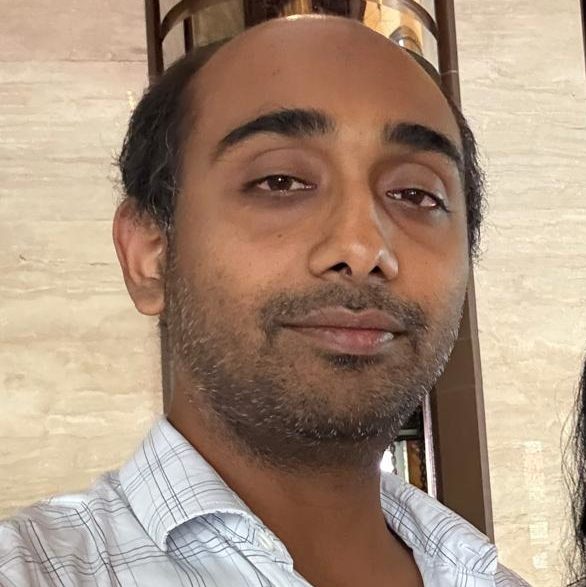
Dr. Dilip Abraham
Associate Professor
MBBS, MD Clinical Microbiology. DTM&H Tropical Medicne PhD
ORCID ID: 0000-0001-9772-9508
Linkedin: https://www.linkedin.com/in/dilip-abraham-1a4558122
Department: Medical Gastroenterology
Department Phone No: +91-0416-2224854
Location: Christian Medical College, Main campus, Ida Scudder Road, Vellore, India
Skills and Expertise
I am a clinician-scientist with a strong focus on genomics, wastewater-based surveillance, and parasitology. My research integrates molecular diagnostics, bioinformatics, and environmental surveillance to address critical public health challenges, particularly in resource-limited settings. My current work explores the role of gut microbiota in inflammatory bowel diseases, particularly Crohn’s disease, using genomic approaches and advanced analytical techniques such as neural network models. I am also actively engaged in wastewater-based surveillance, optimizing methods to detect Salmonella Typhi, cholera, and SARS-CoV-2 in regions lacking clinical surveillance. As part of a Grand Challenges grant, I have investigated the persistence of S. Typhi in drinking water, specifically its potential survival as an endosymbiont within Acanthamoeba. In parasitology, I focus on molecular diagnostics and have optimized molecular assays for detecting Toxoplasma and Free-living amoebae (Naegleria, Acanthamoeba and Balamuthia) in clinical samples. I also contribute to diagnostics at the Wellcome Trust Research Laboratory in Vellore, where I work on improving detection techniques for enteric and parasitic infections. Earlier in my career, I was involved in a cluster-randomized trial on soil-transmitted helminths and studied the impact of enteric infections on oral vaccine efficacy. In addition to research, I teach parasitology, entomology, and immunology to undergraduate and MPH students, helping train the next generation of public health scientists.
Publications
1. Abraham D, Kathiresan L, Aiemjoy K, Charles RC, Kumar D, Srinivasan R, et al. Wastewater surveillance for Salmonella Typhi and its association with seroincidence of enteric fever in Vellore, India. medRxiv. 2024;2024’07. 2. Abraham D, Premkumar PS, Platts-Mills JA, Tewari T, Bhat N, Rajendiran R, et al. Effect of Non-Rotavirus Enteric Infections on Vaccine Efficacy in a ROTASIIL Clinical Trial. The American Journal of Tropical Medicine and Hygiene. 3. Uzzell CB, Abraham D, Rigby J, Troman CM, Nair S, Elviss N, et al. Environmental surveillance for Salmonella Typhi and its association with typhoid fever incidence in India and Malawi. The Journal of Infectious Diseases. 2024;229(4):979’87. 4. Ajjampur SSR, Kaliappan SP, Halliday KE, Palanisamy G, Farzana J, Manuel M, et al. Epidemiology of soil transmitted helminths and risk analysis of hookworm infections in the community: Results from the DeWorm3 Trial in southern India. PLOS Neglected Tropical Diseases. 2021 Apr 30;15(4):e0009338. 2 5. Shaw AG, Majumdar M, Troman C, O’Toole ´A, Benny B, Abraham D, et al. Rapid and sensitive direct detection and identification of poliovirus from stool and environmental surveillance samples using nanopore sequencing. bioRxiv. 2020 Apr 28;2020.04.27.053421. 6. Abraham D, Kaliappan SP, Walson J, Ajampur SSR. Intervention Strategies to Reduce the Burden of Soil Transmitted Helminths in India: a mini review. 2018. Indian J Med Res. 16. Abraham D, Oberoi A, Dewan E, Mohan S. Zygomycoses -urgency in diagnosis. International Journal of Basic and Applied Sciences,4(4) (2015)371-374, DOI:10.14419/ijbas.v4i4.5004